
A. INTRODUCTION AND TERMINOLOGY
A1. BACKGROUND
Hyperglycaemia in pregnancy (HIP) is an umbrella term that encompasses pre-existing diabetes (type 1 diabetes [T1D], type 2 diabetes [T2D], monogenic diabetes), diabetes first detected in pregnancy (DIP) and gestational diabetes mellitus (GDM). HIP is a growing global health concern, affecting approximately 21 million live births annually. The worst impact of the escalating prevalence of HIP is seen in the developing part of the world, including Sri Lanka, driven by the rise of obesity and T2D, sedentary lifestyles associated with rapid socioeconomic development and industrialisation and genetic susceptibility. Nevertheless, evidence of burden of HIP and its morbidity and mortality is not yet mapped in Sri Lanka. A single centre observational study reported, GDM prevalence of 7% overall and up to 14% of pregnancies among high-risk groups, in Colombo. HIP is associated with adverse maternal (pre-eclampsia, obstructed labour, caesarean section) and perinatal (macrosomia, birth trauma, neonatal hypoglycaemia, stillbirth) outcomes. Furthermore, it sets in an intergenerational cycle of non-communicable diseases, significantly increasing the future risk of T2D in both the mother and her offspring.
Sri Lanka has a government-funded widely accessible public health system that functions through three distinct tiers of primary, secondary and tertiary care services. The Maternal and Child Health (MCH) program of Family Health Bureau (FHB), is a well-structured program that is designed to deliver and coordinate care for women and children, from pre-conception to post-natal period that includes, screening for HIP and identification of high-risk women and referral to specialised care. Despite this robust public health system, challenges in managing HIP persist in the country, including regional disparities in access and utilisation of diagnostic tests leading to late presentations or missed cases, shortage of specialists, limited or no-access to home blood glucose monitoring, lack of multidisciplinary services and low rates of postpartum follow-ups.
A1.1. Guiding Principles
The development of this guideline was guided by the following principles:
- Equity: Ensuring access to essential care for all women in the reproductive age, regardless of socioeconomic status.
- Feasibility: Prioritizing recommendations that can be realistically implemented with available resources.
- Cost-Effectiveness: Advocating for interventions that provide the greatest health benefit for the investment.
- Simplicity: Providing clear, unambiguous recommendations and algorithms to minimize complexity at the point of care.
- Evidence-based practice: Ensuring that all recommendations are consistent with the best available international and local evidence, while adapting them to the Sri Lankan context.
A1.2. Methodology of Guideline Development
A1.2.1. Guideline Committee
The guideline committee comprised a multidisciplinary team: guideline committee of the Sri Lanka College of Endocrinologists (SLCE), Sri Lanka College of obstetricians and gynaecologists (SLCOG), consultant nutrition physicians and consultant neonatologists.
A1.2.2. Literature Search and Synthesis
A systematic search for evidence was conducted in electronic databases: PubMed, Cochrane Library and cited reference search. The search focused on guidelines, systematic reviews, randomized controlled trials, observational studies and local publications.
A1.2.3. Formulation of Recommendations
Recommendations were formulated during consensus meetings of the guideline committee. Evidence was categorised according to the scope areas and analysed by the guideline committee considering following principles: balance of benefits and harms, the quality of evidence, cultural acceptance and resource implications.
A1.2.4. Peer Review and Approval
The draft guideline was subjected to external review by the consultant endocrinologists (SLCE) and consultant obstetricians and gynaecologists (SLCOG) who were not part of the guideline committee. Their feedback was collated, reviewed and incorporated in the final version of the guideline by the guideline committee.
A1.2.5. Plan for Update
This guideline is scheduled for a full review in 2028 or sooner if new, practice-changing evidence emerges. The joint guideline committee of SLCE and SLCOG will monitor for new evidence.
A1.3. Key Evidence-based Recommendations
- Diagnostic Criteria (Section C1): The International Association of the Diabetes and Pregnancy Study Groups (IADPSG) criteria, adopted by the WHO (2013), are recommended. These criteria are based on the Hyperglycemia and Adverse Pregnancy Outcomes (HAPO) study, which showed a continuous risk of adverse outcomes with increasing maternal glucose levels, even below diabetes thresholds.
For early pregnancy (6–14 weeks), diagnosis of early GDM may be made using higher thresholds as recommended by the Australasian Diabetes in Pregnancy Society (ADIPS 2025), based on findings from the TOBOGM trial. These higher thresholds help identify women with clinically significant early hyperglycaemia while avoiding over-diagnosis in early gestation.
- Universal Screening (Section C1.1, C1.2): Considering the high susceptibility associated with south Asian ethnicity and the high prevalence of type 2 diabetes, universal screening is considered cost-effective and will prevent missed cases and subsequent morbidity and mortality.
- Glycaemic Targets (Section C2.1): Tight glycaemic control, as defined by the targets from the HAPO study and subsequent trials, is recommended to reduce risks of HIP.
Pharmacological Treatment (Section C2.4, C2.5):
- Insulin is considered as the gold standard therapy due to its safety and efficacy in achieving tight glycaemic targets recommended during pregnancy.
- Metformin is considered safe and effective adjunct/alternative first-line therapy for GDM and T2D in pregnancy, with no increased risk of major congenital malformations or perinatal mortality. It is cost-effective and has high patient acceptability.
- Postpartum care (Section E): Women with GDM have a very high risk of developing type 2 diabetes later in life. A 75g OGTT (Oral Glucose Tolerance Test), FPG (Fasting Plasma Glucose) or PPPG (Post Prandial Plasma Glucose) at 6-8 weeks postpartum can be used for reclassification and is critical for initiating follow up of the patients.
A2. DEFINITIONS
- Hyperglycaemia in Pregnancy (HIP)– An umbrella term for any degree of glucose intolerance during pregnancy, including pre-existing diabetes, gestational diabetes mellitus (GDM) and diabetes in pregnancy (DIP).
- Pre-existing Diabetes - Diabetes diagnosed prior to conception: T1D, T2D, disease of exocrine pancreas, monogenic diabetes (eg:MODY).
- Diabetes in Pregnancy (DIP) – Hyperglycaemia first detected in pregnancy that meets the usual diagnostic thresholds for diabetes outside pregnancy (fasting plasma glucose ≥126 mg/dL, or an HbA1c ≥6.5%, or a random plasma glucose ≥200 mg/dL).
- Early Gestational Diabetes Mellitus (Early GDM): Hyperglycaemia first detected before 14 weeks’ gestation that does not meet criteria for DIP but meets the diagnostic thresholds for early GDM informed by the TOBOGM study. (fasting plasma glucose 95 mg/dL to 125 mg/dL or 1-hr plasma glucose > 191 mg/dL or 2-hour plasma glucose 162 -199 mg/dl following 75 g oral glucose tolerance test [OGTT]).
- Gestational Diabetes Mellitus (GDM) – Hyperglycaemia first detected in pregnancy that does not meet the usual diagnostic thresholds for diabetes outside pregnancy but has been shown to cause adverse maternal and foetal outcomes (fasting plasma glucose 92 mg/dL to 125 mg/dL or 1-hr plasma glucose > 180 mg/dL or 2-hour plasma glucose 153 -199 mg/dl following 75 g oral glucose tolerance test [OGTT]).
A3. CLASSIFICATION
There are many controversies surrounding classification of hyperglycaemia in pregnancy with different organizations adopting different methods.
We propose the following classification based on International Diabetes Federation (IDF) and WHO recommendations to help and guide clinically appropriate management to improve maternal and foetal outcomes.
Figure 01. Proposed classification of hyperglycaemia in pregnancy, adapted from WHO and IDF recommendations.
A4. RISK FACTORS FOR GESTATIONAL DIABETES MELLITUS
Important risk factors for GDM are shown in Table 01.
Table 01. Risk factors for gestational diabetes mellitus
| Risk factor | Notes |
|---|---|
| Maternal BMI >30 kg/m² | Pre-pregnancy or at booking visit |
| Previous GDM | Strongest predictor of recurrence |
| Maternal age >40 years | Risk increases progressively with age |
| Family history of diabetes | First-degree relative with GDM |
| Previous macrosomia | Birth weight >4000 g or >90th percentile |
| Polycystic ovary syndrome (PCOS) | Associated with insulin resistance |
| South Asian ethnicity | All Sri Lankan women considered at high risk |
A5. COMPLICATIONS OF HYPERGLYCEMIA IN PREGNANCY (HIP)
Please refer Table 02 for important maternal, foetal/neonatal complications of HIP.
Table 02. Maternal and foetal complications associated with hyperglycaemia in pregnancy.
| Category | Category | Gestational diabetes mellitus (GDM) | Pre-existing diabetes (Type 1, Type 2, others) / Diabetes in Pregnancy |
|---|---|---|---|
| Maternal complications | Pre-eclampsia and gestational hypertension Polyhydramnios Increased risk of caesarean section Induced labour Obstructed labour due to macrosomia Pre-term labour and birth Postpartum haemorrhage Infection Birth trauma Recurrent GDM in future pregnancies Higher lifetime risk of type 2 diabetes | Pre-eclampsia and gestational hypertension Polyhydramnios Increased risk of caesarean section Induced labour Obstructed labour due to macrosomia Pre-term labour and birth Postpartum haemorrhage Infection Birth trauma Recurrent GDM in future pregnancies Higher lifetime risk of type 2 diabetes | Worsening of pre-existing microvascular complications (retinopathy, nephropathy, neuropathy). Increased risk of severe hypoglycaemia and diabetic ketoacidosis (especially in type 1 DM). Increased risk of maternal mortality in poorly controlled cases. All complications in GDM can also occur here. |
| Fetal/neonatal complications | Macrosomia (birth weight >4,000 g) Shoulder dystocia and birth trauma Prematurity Neonatal hypoglycaemia Jaundice Hypocalcaemia Polycythemia/ hyperviscocity Neonatal respiratory distress Increased perinatal morbidity and mortality | Macrosomia (birth weight >4,000 g) Shoulder dystocia and birth trauma Prematurity Neonatal hypoglycaemia Jaundice Hypocalcaemia Polycythemia/ hyperviscocity Neonatal respiratory distress Increased perinatal morbidity and mortality | Diabetic embryopathy: anencephaly, microcephaly, congenital heart disease, kidney anomalies, caudal regression (directly proportional to elevated HbA1C during first 10 weeks of gestation). Miscarriage and stillbirth. Intrauterine growth restriction (IUGR) due to maternal vasculopathy. All complications in GDM can also occur here. |
| Long-term complications of the offspring | Increased risk of obesity, impaired glucose tolerance, metabolic syndrome and type 2 diabetes later in life. | Increased risk of obesity, impaired glucose tolerance, metabolic syndrome and type 2 diabetes later in life. | Same as GDM, but higher risk magnitude due to chronic intrauterine hyperglycaemia and exposure to maternal complications. |
References
- World Health Organization. Diagnostic criteria and classification of hyperglycaemia first detected in pregnancy. Geneva: WHO; 2013.
- Metzger BE, Lowe LP, Dyer AR, et al. Hyperglycemia and adverse pregnancy outcomes. N Engl J Med. 2008;358(19):1991–2002.
- International Association of Diabetes and Pregnancy Study Groups (IADPSG) Consensus Panel, Metzger BE, Gabbe SG, Persson B, et al. International association of diabetes and pregnancy study groups recommendations on the diagnosis and classification of hyperglycemia in pregnancy. Diabetes Care. 2010;33(3):676–82.
- Guariguata L, Linnenkamp U, Beagley J, Whiting DR, Cho NH. Global estimates of the prevalence of hyperglycaemia in pregnancy. Diabetes Res Clin Pract. 2014;103(2):176–85.
- Jayawardane IA, Wijeyaratne CN, et al. Prevalence and outcomes of gestational diabetes in Sri Lanka. Sri Lanka J Diabetes Endocrinol Metab. 2017;7(1):29–36.
- American Diabetes Association. 14. Management of Diabetes in Pregnancy: Standards of Care in Diabetes—2025. Diabetes Care. 2025;48(Suppl. 1):S254–S267.
- Sweeting AN, Ross GP, Hyett J, Molyneaux L, Tan K, Constantino M, et al. Gestational Diabetes Mellitus: A Clinical Update. Endocr Rev. 2022;43(5):763–93.
- International Federation of Gynecology and Obstetrics (FIGO). Gestational diabetes mellitus: global guidelines. Int J Gynaecol Obstet. 2015;131(S3):S173–211.
- Hod M, Kapur A, Sacks DA et al. The International Federation of Gynecology and Obstetrics (FIGO) initiative on gestational diabetes mellitus. Int J Gynecol Obstet. 2015.
- McIntyre HD, Roglic G, et al. Diagnosis of GDM: A summary of international recommendations. Diabet Med. 2018.
- Sacks DB et al. Guidelines for laboratory analysis in diabetes mellitus. Clin Chem. 2011.
- Simmons D, Immanuel J, Hague WM, Teede H, Nolan CJ, Peek MJ, et al. Treatment of Gestational Diabetes Mellitus Diagnosed Early in Pregnancy. N Engl J Med [Internet]. 2023 Jun 8 [cited 2026 Jan 30];388(23):2132–44. Available from: http://www.nejm.org/doi/10.1056/NEJMoa2214956
B. PRE-CONCEPTION PLANNING AND CARE
All women with diabetes and reproductive potential should be given pre- conceptional advice during routine diabetes care. Preconception care includes education, detection and management of hyperglycaemia, other metabolic and body weight abnormalities prior to conception.
B1. WHO SHOULD HAVE PRECONCEPTION EDUCATION?
All women in the reproductive age group including women with diagnosed prediabetes and diabetes.
B2. WHAT ARE THE COMPONENTS OF PRECONCEPTION EDUCATION FOR PATIENTS DIAGNOSED WITH PREDIABETES AND DIABETES?
- Education on the risk of development and /or progression of diabetic retinopathy and nephropathy, hence importance of periodic screening
- Education on the risk of congenital malformations associated with suboptimal blood glucose control and unplanned pregnancies
- Maintenance of normal body mass index, regular physical activity and healthy diet
- Review of current medications and discontinuation or adjustment of drugs that are contraindicated in pregnancy (e.g., statins, ACE inhibitors, ARBs).
- Importance of prenatal folic acid supplementation.
- Use of effective contraception if blood glucose control is suboptimal.
B3. WHO SHOULD DELIVER PRECONCEPTION EDUCATION?
- Endocrinologist
- Obstetrician
- Diabetic Education Nursing Officers (DENO)
- Public Health Midwife (PHM)
- Public Health Nursing Sister (PHNS)
- Medical Officer of Health (MOH)
- Nutrition Specialist
- General Practitioner
- Physician
B4. WHO SHOULD BE SCREENED FOR DIABETES DURING PRECONCEPTION?
All females with reproductive potential should be screened for diabetes, using one of the tests mentioned below.
B5. HOW SHOULD WOMEN PLANNING A PREGNANCY BE SCREENED?
Standard diagnostic criteria used for nonpregnant adults are used for diagnosis of diabetes and prediabetes.
Table 03. Diagnostic criteria for diabetes and prediabetes
| Test | Diabetes | Prediabetes | Normal |
|---|---|---|---|
| Fasting plasma glucose (FPG) | ≥126 mg/dL | 100–125 mg/dL | <100 mg/dL |
| 2-hour plasma glucose after 75 g OGTT | ≥200 mg/dL | 140–199 mg/dL | <140 mg/dL |
| HbA1c | ≥6.5% | 5.7–6.4% | <5.7% |
| Random plasma glucose (with symptoms) | ≥200 mg/dL | – | – |
B6. WHAT ARE THE RECOMMENDED PRECONCEPTIONAL GLYCAEMIC TARGETS FOR WOMEN DIAGNOSED WITH DIABETES?
- HbA1c <6.5% is recommended if it can be achieved without significant hypoglycaemia.
B7. HOW TO OPTIMISE ROUTINE MEDICATIONS DURING PRECONCEPTION CARE?
All medications that are not safe or contraindicated for conception/embryopathic-drugs should be discontinued in women who are planning pregnancy.
- Insulin is the preferred therapy during preconception and pregnancy.
- Metformin can be used as an alternative or adjunct.
- Other oral hypoglycaemic agents should be discontinued.
- ACE inhibitors/ ARBs, mineralocorticoid receptor antagonists and diuretics are recommended to be changed to alternative anti-hypertensive drugs before conception.
- In those patients who would benefit from continuing above medication, specialist advice should be sought about individual risk benefit assessment.
- Safe antihypertensives in pregnancy include nifedipine, methyldopa and labetalol.
- Statins should be stopped prior to conception or as soon as pregnancy is confirmed. A multidisciplinary opinion is advised for high-risk women (e.g., familial hypercholesterolaemia, established atherosclerotic disease).
- Folic acid 5 mg daily is recommended, ideally started 3 months before conception and continued till 12 weeks of pregnancy.
B8. HOW TO SCREEN AND MANAGE DIABETES RELATED MICRO / MACROVASCULAR COMPLICATIONS DURING PRECONCEPTION?
All women with diabetes should undergo screening for complications as part of preconception care.
Retinopathy:
- Offer dilated fundus examination if not done within the last 6 months.
- Refer for specialist care if non-proliferative/ proliferative retinopathy or maculopathy is present.
Nephropathy:
- Assess serum creatinine and urine albumin-creatinine ratio (ACR).
- Refer for specialist care if serum creatinine >120 µmol/L, urine ACR >30 mg/mmol, or eGFR <45 mL/min/1.73 m².
Cardiovascular disease:
- Screen if the patient is symptomatic or at very high cardiovascular risk.
- If there is evidence of any advanced micro vascular or macro vascular complications, multi-disciplinary team discussion is needed to discuss fitness for a pregnancy considering individual risk.
References
- Jayawardene IA, Wijeyaratne CN. Preconception and antenatal care for women with diabetes in Sri Lanka. Sri Lanka J Diabetes Endocrinol Metab. 2016;6(2):41–7.
- National Institute for Health and Care Excellence (NICE). Diabetes in pregnancy: management from preconception to the postnatal period. NICE guideline [NG3]. London: NICE; 2020.
- American Diabetes Association. 14. Management of Diabetes in Pregnancy: Standards of Care in Diabetes—2025. Diabetes Care. 2025;48(Suppl. 1):S254–S267.
- Jensen DM et al. Outcomes in type 1 and type 2 diabetes: A population-based cohort. Diabetes Care. 2022.
- Kitzmiller JL, Block JM, Brown FM, Catalano PM, Conway DL, Coustan DR, et al. Managing preexisting diabetes for pregnancy: summary of evidence and consensus recommendations for care. Diabetes Care. 2008 May;31(5):1060–79.
C. ANTENATAL CARE
C1. HOW TO SCREEN PREGNANT WOMEN FOR HIP?
C1.1. Who should be screened?
All pregnant women should be screened for diabetes, unless they are already known to have diabetes.
C1.2. When should they be screened?
At the booking visit (first antenatal visit): Usually around 6– 14 weeks of gestation. Universal screening at booking is essential to detect previously undiagnosed diabetes.
At 24–28 weeks: All women who had normal results at the booking visit should be rescreened with a 75 g OGTT.
At 22–24 weeks (optional): For women at high risk of GDM (see risk factors in Section A 5), consider an earlier rescreen if booking tests were negative.
After 28 weeks: Routine screening beyond 28 weeks is not recommended.
However, if evidence of foetal hyperinsulinemia is noted (abdominal circumference > 90th centile, estimated foetal weight > 90th centile, or increased amniotic fluid volume at 28 - 36 weeks) repeating the screening test is recommended.
C1.3. What are the recommended screening tests for Diabetes in Pregnancy at the booking visit?
Preferred test: 75 g Oral Glucose Tolerance Test (OGTT) with plasma glucose measured at fasting, 1 hour and 2 hours.
Alternative tests (if OGTT cannot be performed):
- Fasting plasma glucose (FPG)
- 2-hour post-prandial plasma glucose (2-hr PPPG)
- HbA1c
C1.4. How to diagnose Diabetes in Pregnancy (DIP) at the booking visit?
- Diabetes in pregnancy should be diagnosed by the WHO criteria for diabetes (Table 03).
- Further screening for DIP is not indicated for women who are already diagnosed with diabetes.
C1.5. How to diagnose early GDM at the booking visit?
Evidence regarding the optimal threshold to diagnose GDM in early pregnancy continues to evolve. The TOBOGM trial (NEJM 2023) demonstrated modest neonatal benefit from early treatment using standard WHO/IADPSG thresholds. However, the Australasian Diabetes in Pregnancy Society (ADIPS) 2025 consensus recommendations suggest higher diagnostic thresholds for early pregnancy to reduce overdiagnosis while still identifying women at genuine metabolic risk.
Therefore, the guideline committee recommends using the ADIPS 2025 early-pregnancy thresholds for diagnosing GDM at booking (6–14 weeks), based on current evidence and ADIPS recommendations, until further evidence becomes available.
Table 04: Criteria for early GDM diagnosis at the booking visit (6–14 weeks)
| Test | Threshold (mg/dL) | Interpretation / Action |
|---|---|---|
| Fasting plasma glucose | ≥ 95 – 125 | Early GDM initiate management (lifestyle ± pharmacotherapy) |
| 1-hour plasma glucose (after 75 g OGTT) | ≥ 191 | Early GDM |
| 2-hour plasma glucose (after 75 g OGTT) | 162 – 199 | Early GDM |
Notes:
- Women with Early GDM (meeting ADIPS 2025 thresholds) should receive:
- Individualised medical nutrition therapy,
- Glucose monitoring and
- Pharmacotherapy (e.g., insulin or metformin) if targets are not met.
- Women with 2-hour glucose 140–161 mg/dL have an increased risk of developing GDM later and should receive lifestyle counselling and repeat testing at 24–28 weeks.
- Diagnostic confirmation should be based on a single abnormal value meeting the threshold.
C1.6. How to interpret OGTT done at 24 – 28 weeks?
IADPSG/ WHO criteria given below are recommended to diagnose GDM based on OGTT done at 24 – 28 weeks. The diagnosis of GDM should be based on any one of the following values. One or more positive value is diagnostic of GDM.
Table 05: OGTT interpretation at 24-28 weeks
C1.7. What are the interfering factors and considerations when performing OGTT?
- Steroid administration (betamethasone/dexamethasone) within one week of the test can interfere with results.
- Results could be misleading if the pregnant woman was taking metformin for PCOS (polycystic ovarian syndrome).
C2. MANAGEMENT OF HYPERGLYCAEMIA IN PREGNANCY (HIP)
C2.1. What should be the blood glucose targets in pregnancy?
Following are the recommended blood glucose targets in pregnancy.
Table 06: Blood glucose targets in pregnancy
| Glucose Measurement | Type 1 or Type 2 Diabetes | GDM Treated with Insulin | GDM Not Treated with Insulin |
|---|---|---|---|
| Fasting glucose | 70–95 mg/dL | 70–95 mg/dL | < 95 mg/dL |
| 1-hour postprandial glucose | 110–140 mg/dL | 110–140 mg/dL | < 140 mg/dL |
| 2-hour postprandial glucose | 100–120 mg/dL | 100–120 mg/dL | < 120 mg/dL |
Non- Pharmacological Treatment of HIP
C2.2. Medical Nutrition Therapy (MNT)
C2.2.1. What is the role of Medical Nutrition Therapy (MNT)?
MNT should be initiated as soon as HIP is diagnosed. Ideally, this should be led by a consultant nutrition physician with structured follow-up.
Objectives of MNT:
- Achieve and maintain normoglycaemia.
- Promote optimal maternal weight gain.
- Support appropriate foetal growth.
- Prevent ketosis.
MNT is the cornerstone of therapy, particularly in gestational diabetes mellitus (GDM), where 80–90% of women can be managed with diet alone.
- Hypocaloric or ketogenic diets are contraindicated. Daily energy intake should meet:
- Basal metabolic needs of the mother
- Physical activity requirements
- Foetal growth and maternal weight gain
- Diet plans must be individualised considering medical, psychological, cultural and social factors.
- Energy requirements depend on pre-pregnancy BMI, gestational weight gain and stage of pregnancy.
- Maternal weight should be documented at booking. Women with excess weight gain require referral to a clinical nutritionist.
- Energy requirements should be guided by South Asian Federation of Endocrine Societies (SAFES) recommendations, as summarized in Table 07.
Table 07: Energy requirements during pregnancy according to pre-pregnancy BMI
| Pre pregnancy BMI | Energy requirement during first trimester (for present weight) | Energy requirements during second trimester (for present weight) |
|---|---|---|
| <18.5 | 35 kcal/kg/day | 40 kcal/kg/day |
| 18.5-22.9 | 30 kCal/kg/day | 38 kCal/kg/day |
| 23.0-27.4 | 25 kcal/kg/day | 30 kcal/kg/day |
| >27.5 | Maximum 24 kcal/kg/day or 30 %-33% reduction of prior caloric intake (Minimum 1800 kcal providing 175 g carbohydrates, 71g protein and 28g fiber) | Maximum 24 kcal/kg/day or 30 %-33% reduction of prior caloric intake (Minimum 1800 kcal providing 175 g carbohydrates, 71g protein and 28g fiber) |
C2.2.2. How should MNT be monitored?
- Maternal weight gain
- Self-Monitoring of Blood Glucose (SMBG)
- Appetite, blood pressure, urine ketones
- Food/activity records
- Foetal growth monitoring
Regular follow-up while on MNT is recommended, with diet plans adjusted according to maternal and foetal parameters.
C2.2.3. What is the recommended meal pattern?
3 meals and 2- 3 snacks should be taken including 1 snack at bedtime. Bedtime snack should be individualized if patient is on insulin.
- Recommended overall total caloric distribution:
- Minimum Carbohydrate 175g/day: (35-50%% with low glycaemic index and glycaemic load)
- Protein: ~ 20%
- Fat: ≤ 40%, saturated fat <7% and trans-fat <1%
- Adjusting the type and amount of carbohydrate to achieve the desired postprandial blood sugars is important.
- It is best not to allow more than 10-12 hours between the last evening meal and the next morning meal.
- Complex carbohydrates with low glycaemic index are preferred. Portion control is needed to maintain the low glycaemic load. Glycaemic load can be controlled with addition of adequate greens as per plate model.
- Plate model for diet can be used to educate patients about the composition of each meal.

Figure 02: Suggested plate model to demonstrate a healthy meal for women with HIP
Reprinted from ‘Carb Counter- for people living with diabetes’ by Maulee Arambewela, Chandrika Subasinghe and Sonali Gunatilake (Ed.), 2021, Sri Lanka College of Endocrinologists
C2.2.4. What food should be encouraged or avoided?
Encouraged:
- High-fibre food, whole grains
- Lean protein and oily fish (rich in omega-3 fatty acids)
- Fruits and vegetables (as per plate model)
Avoid/Limit:
- Simple sugars and refined carbohydrates
C2.3. Exercise/ Physical Activity
If any obstetric or gynaecological condition contraindicates exercise, this should be taken to consideration prior to recommending exercise or physical activity.
C2.3.1. Why are physical activity and exercise important during pregnancy?
Exercise increases insulin sensitivity by which blood glucose levels can be lowered. Physical activity after meals may improve post prandial blood glucose levels.
C2.3.2. What is the recommended intensity of physical exercise in pregnancy?
The recommended intensity of exercise would depend on the woman’s level of fitness and current physical activity, presence of complications and familiarity with exercise.
- Ideally, women should undertake approximately 30 min of moderate-intensity physical activity on most days of the week. Eg: brisk walking / arm exercises while seated in a chair for 10 minutes will achieve this goal.
- Physical activity may be broken into shorter periods of at least 10-minute periods of moderate effort about three times a day
- Women who are sedentary, overweight or obese - start with a shorter duration of exercise (15–20 min) before slowly building up to a duration of 30 minutes.
- Women who are already more active - maintain or lower intensity during pregnancy rather than attempting to progress to higher levels
C2.3.3. What types of physical exercise are recommended during pregnancy?
- Moderate intensity aerobic exercise (e.g. walking, cycling, swimming)
- Yoga and breathing exercises.
- light or moderate resistance exercises
- Upper limb exercises while seated for 10 minutes (helps in reducing post prandial blood sugars)
C2.3.4. What are the activities and types of exercises which should be avoided during pregnancy?
- Exercises with excessive abdominal muscular contraction
- Exercises which involve balance
- Exercises which involve lying flat on the back
- Activities with Increased risk of falling or abdominal trauma, or require frequent changes in direction (e.g., contact sports)
- Activities which exert extra load to the pelvic floor (e.g., bouncing or jumping)
C2.3.5. What advice should you give regarding physical exercise in pregnancy?
- Avoid dehydration during and after physical activity
- Advice women taking insulin on the risk of hypoglycaemia during or after exercise.
- Wear loose light clothing to avoid overheating.
- Not to exercise when hungry, unwell or with an elevated temperature.
- Avoid exercising in high temperatures and humidity.
C2.3.6. What are the indications to cease physical activity and seek advice from health care provider?
- Increased heart rate
- Dyspnoea prior to or during exertion
- Dizziness, faintishness, nausea
- Headache
- Decreased foetal movements
- Uterine contractions, vaginal bleeding, amniotic fluid leakage
- Back or pelvic pain
- Chest pain
- Muscle weakness
- Calf pain or swelling or sudden swelling of ankles, hands and/or face
Pharmacological Treatment of HIP
C2.4. Oral Hypoglycaemic Drug Therapy
C2.4.1. When should pharmacological therapy be initiated?
Pharmacological therapy should be initiated in the following situations:
- When FPG is > 126 mg/dL at diagnosis.
- When FPG is 108 - 125 mg/dL at diagnosis with evidence of complications such as polyhydramnios and macrosomia.
- When glycaemic targets are not achieved despite adequate Medical Nutrition Therapy (MNT) and lifestyle intervention within 1–2 weeks.
- When glycaemic targets are not maintained, even if initial control was achieved with MNT alone.
- For all patients with DIP pharmacological treatment should be started at diagnosis.
Preferred agents:
- Insulin remains the gold standard.
- Metformin may be considered first-line due to cost-effectiveness and ease of use.
C2.4.2. What is the place of metformin in the management of Hyperglycaemia in Pregnancy (HIP)?
Metformin has been used safely in pregnancy since 1980s. Evidence supports its efficacy and short-term safety in both gestational diabetes mellitus (GDM) and pre-existing diabetes.
Benefits:
- Lower maternal weight gain
- Reduced risk of neonatal hypoglycaemia
- Lower rates of macrosomia and large-for-gestational-age neonates
- Oral administration, low cost and higher patient acceptability
Cautions:
- Foetal growth restriction
- Women with poor weight gain
As add-on to insulin:
- Consider when there is marked glucose variability
- In women requiring high insulin doses with inadequate control
C2.4.3. How to initiate and titrate metformin therapy?
- Metformin may be considered as first-line pharmacotherapy for women with GDM who fail to achieve glycaemic targets with lifestyle modification, provided there are no contraindications (e.g., renal impairment, hepatic disease).
- Start with 500 mg once daily with the main meal and increase by 500 mg every 3–7 days as tolerated to minimise gastrointestinal side effects. The usual effective dose is 1,000 mg twice daily (maximum 2,500 mg/day).
- If glycaemic targets are not met with metformin, insulin should be added.
- Metformin should be avoided in women with significant renal dysfunction (eGFR < 30 mL/min/1.73 m²) or conditions predisposing to hypoxia or acidosis.
C2.5. Insulin Therapy
C2.5.1. What are the indications to initiate insulin therapy?
- Suboptimal control despite MNT and exercise.
- As add on therapy to metformin
DIP with fasting plasma glucose ≥ 126 mg/dL or significantly elevated post prandial blood glucose levels.
- Consider insulin if there is suboptimal control with complications such as macrosomia or polyhydramnios.
C2.5.2. How to initiate and titrate insulin therapy?
General principles
- Insulin therapy should be individualized and aimed at achieving glycaemic targets safely, avoiding both hyperglycaemia and hypoglycaemia.
- Frequent self-monitoring of blood glucose (SMBG) and regular review are essential to guide titration.
- Women and their families should be educated on insulin administration technique, recognition and management of hypoglycaemia and dietary consistency.
- Basal–bolus therapy is the gold standard insulin regimen during pregnancy.
Step 1: Initiation
- If fasting blood glucose remains above target despite lifestyle measures and metformin, initiate intermediate-acting (NPH) or long-acting basal insulin at bedtime.
- The starting dose is typically 0.1 - 0.2 units/kg/day or higher depending on glycaemic levels and gestational age.
Step 2: Titration of Basal Insulin
- Adjust the basal insulin dose every 48–72 hours based on fasting SMBG readings.
- Increase by 2–4 units if the fasting glucose remains above target for two or more consecutive readings.
- Reduce the dose by 2–4 units if fasting glucose falls below 3.9 mmol/L (70 mg/dL) or if there are symptoms of hypoglycaemia.
- Continue titration until the fasting glucose target is achieved (fasting < 95 mg/dL)
Step 3: Control of Postprandial Glucose
- If post-meal glucose remains above target, add bolus insulin before meals.
- Use short-acting human insulin (regular) or ultra-short acting insulin analogues (lispro, aspart).
- Initial dose can be 4 - 6 units before meals at which post prandial sugar levels are above target and can be titrated as needed.
- Adjust postprandial (bolus) insulin as frequently as possible (daily or every 48–72 hours) to reach post-meal targets (1-hour post-meal < 140 mg/dL or 2-hour post-meal < 120 mg/dL).
Step 4: Monitoring and Ongoing Adjustment
- Insulin requirements increase progressively by approximately 5% per week between 16–36 weeks of gestation.
- Requirements may plateau or fall after 36 weeks or if caloric intake decreases.
- Sudden fall of insulin requirements before 36 weeks should prompt evaluation for placental insufficiency.
- Adjust both basal and bolus components as needed to maintain fasting and postprandial targets.
- Avoid abrupt large dose changes unless clinically indicated.
Step 5: Special situations
- In some women with hyperglycaemia in pregnancy (HIP) where fasting glucose is well controlled with lifestyle or metformin, but post-meal readings are high, only bolus insulin may be required.
- Premixed insulin formulations (e.g., 30/70, 25/75) are not ideal for pregnancy, as they lack flexibility for adjusting basal and prandial components separately.
- Consider premixed insulin only in women who are unable or unwilling to follow a basal–bolus regimen, after counselling.
- If used, administer twice daily (before breakfast and dinner) and titrate cautiously.
Step 6: Transition and safety
- Insulin titration should be supervised by a clinician experienced in diabetes in pregnancy.
Educate the patient about:
- Symptoms and management of hypoglycaemia.
- Importance of consistent meal timing and carbohydrate intake.
- Proper storage and injection technique.
- Review for nocturnal hypoglycaemia.
- Always reassess adherence, technique, diet and SMBG accuracy before increasing doses.
C2.5.3. What are available insulin types and their safety profile?
Table 08: Insulin types, actions and recommendations in pregnancy
| Type of Insulin | Generic name | Onset of action | Peak action | Duration of action | Recommendation |
|---|---|---|---|---|---|
| Rapid acting | Insulin aspart | 15 minutes | 30 – 90 minutes | 3 – 5 hours | High post meal blood glucose should be controlled by bolus insulin. Only bolus insulin may be needed in some cases of GDM when FBG is well controlled with non-Pharmacological therapy. |
| Rapid acting | Insulin lispro | 15 minutes | 30 – 90 minutes | 3 – 5 hours | High post meal blood glucose should be controlled by bolus insulin. Only bolus insulin may be needed in some cases of GDM when FBG is well controlled with non-Pharmacological therapy. |
| Short acting | Regular insulin | 30 – 60 minutes | 2 – 4 hours | 5 – 8 hours | High post meal blood glucose should be controlled by bolus insulin. Only bolus insulin may be needed in some cases of GDM when FBG is well controlled with non-Pharmacological therapy. |
| Short acting | Regular insulin | 30 – 60 minutes | 2 – 4 hours | 5 – 8 hours | High post meal blood glucose should be controlled by bolus insulin. Only bolus insulin may be needed in some cases of GDM when FBG is well controlled with non-Pharmacological therapy. |
| Intermediate acting | NPH (Isophane insulin) | 1 – 3 hours | 8 hours | 12 – 16 hours | In case of high fasting blood glucose (FBG), an intermediate acting human insulin or basal analogue insulin with a dose of 0.1 to 0.2U/kg at bedtime may be a starting dose. Isophane insulin may need to be given twice a day. |
| Intermediate acting | NPH (Isophane insulin) | 1 – 3 hours | 8 hours | 12 – 16 hours | In case of high fasting blood glucose (FBG), an intermediate acting human insulin or basal analogue insulin with a dose of 0.1 to 0.2U/kg at bedtime may be a starting dose. Isophane insulin may need to be given twice a day. |
| Long acting | Insulin glargine | 1 hour | Peakless | 20 – 26 hours | Can be continued safely during pregnancy in women who are already taking it prior to pregnancy and have achieved good glycaemic control with it. Usually given once a day. |
| Pre-mixed (NPH and regular insulin) | 70% NPH and 30% regular | 30 – 60 minutes | Varies | 10 – 16 hours | The Premixed insulin regimens put the woman at risk of fluctuating glycaemic control during pregnancy and should ideally be avoided. However, premixed insulin can be considered on individual basis where patients are unwilling to or unable to take basal bolus regimen. |
| Pre-mixed (NPH and regular insulin) | 50% NPH and 50% regular | 30 – 60 minutes | Varies | 10 – 16 hours | The Premixed insulin regimens put the woman at risk of fluctuating glycaemic control during pregnancy and should ideally be avoided. However, premixed insulin can be considered on individual basis where patients are unwilling to or unable to take basal bolus regimen. |
C2.6. Blood glucose monitoring: What are the methods of blood glucose monitoring?
- Self-monitoring of blood glucose (SMBG)
- Essential throughout pregnancy.
- The frequency of self-monitoring of blood glucose will be determined by the type of diabetes, adequacy of blood glucose control, foetal complications and the stage of pregnancy
a. Type 1 Diabetes Mellitus (T1D) • 4–6 checks per day • Includes: on waking, post-prandial, bedtime and occasional 3–4 am monitoring to detect nocturnal hypoglycaemia and whenever someone has symptoms of hypoglycaemia at any time.
b. Type 2 Diabetes Mellitus (T2D) and GDM treated with insulin • At least 4 times per day (on waking + post-prandial) • In the Sri Lankan setting, a minimum of 1–2 days per week with full profiles is acceptable when resources are limited
c. GDM managed with diet and/or metformin • At minimum: on waking + post-prandial • At least 1–2 days per week, with additional monitoring if glycaemic targets are not met or if foetal complications emerge
- Blood Sugar Series (BSS) at outpatient and ward setup
- Fasting and 1 hour or 2-hour PPPG (1 hour preferred) after each meal.
- This should be reserved for those on insulin when SMBG is not practical.
- Frequency should be individualised based on glycaemic control.
- Insulin-treated women require more frequent monitoring than those on metformin alone.
2 weekly BSS is appropriate if practical.
- Continuous glucose monitoring (CGM)
- Recommended for all pregnant women with type 1 diabetes in many countries.
- Improves attainment of glycaemic targets and neonatal outcomes.
- Not yet widely available in Sri Lanka.
C2.7. Which patients need medical/ endocrinology referral?
- All patients with pre-existing diabetes should have a medical/ endocrine referral as soon as they are known to be pregnant to optimise glucose control.
- All patients with GDM should have medical/endocrine referral if it’s difficult to achieve glucose targets or if having frequent hypoglycaemia.
C2.8. What are the sick-day rules to follow?
All women with type 1 diabetes should receive education on sick-day management. This should include:
A written sick-day plan and kit.
- Guidance on insulin dose adjustment and prevention of DKA and hypoglycaemia.
- Instructions on when to seek urgent medical attention.
C2.9. Diabetic ketoacidosis in pregnancy (DKP)
DKP is an obstetric and metabolic emergency with significant maternal and foetal morbidity and mortality.
- Most common in type 1 diabetes but may also occur in type 2 diabetes and rarely in GDM.
C2.9.1. What are the precipitating factors for DKP?
- Prolonged vomiting / hyperemesis gravidarum
- Infections
- Omission of insulin
- Certain medications
- Gastroparesis
C2.9.2. What are the signs and symptoms of DKP?
- Nausea or vomiting
- Abdominal pain
- Polyuria or polydipsia
- Blurred vision
- Muscle weakness
- Drowsiness
- Lethargy
- Change in mental status
- Hyperventilation (Kussmaul breathing)/ pear drop odour
- Tachypnoea
- Hypotension
- Tachycardia
- Coma
- Shock
- Abnormal foetal heart tracing
C2.9.3. What are the diagnostic criteria for DKP? (adapted from JBDS/ RCOG)
- Blood ketones ≥ 3.0 mmol/L or urine ketones ≥ 2+
- Blood glucose > 11.0 mmol/L or known diabetes
- Bicarbonate < 15.0 mmol/L and/or venous pH < 7.3
C2.9.4. How to manage DKP?
- Should be conducted in a high-dependency or intensive care setting, by a multidisciplinary team.
Principles:
IV fluid replacement
IV insulin infusion
- Electrolyte correction (especially potassium)
- Identification and treatment of precipitating cause
- Continuous maternal and foetal monitoring
Metabolic targets:
- Ketones decrease by ≥ 0.5 mmol/L/h
- Bicarbonate increase by ≥ 3 mmol/L/h
- Glucose decrease by ~3 mmol/L/h (~54 mg/dL/h)
- Phosphate replacement is not routine; indicated only if < 0.32 mmol/L or if cardiac/respiratory dysfunction develops.
- Thromboprophylaxis is recommended (e.g. enoxaparin 40 mg SC daily or unfractionated heparin 7500 IU SC twice daily).
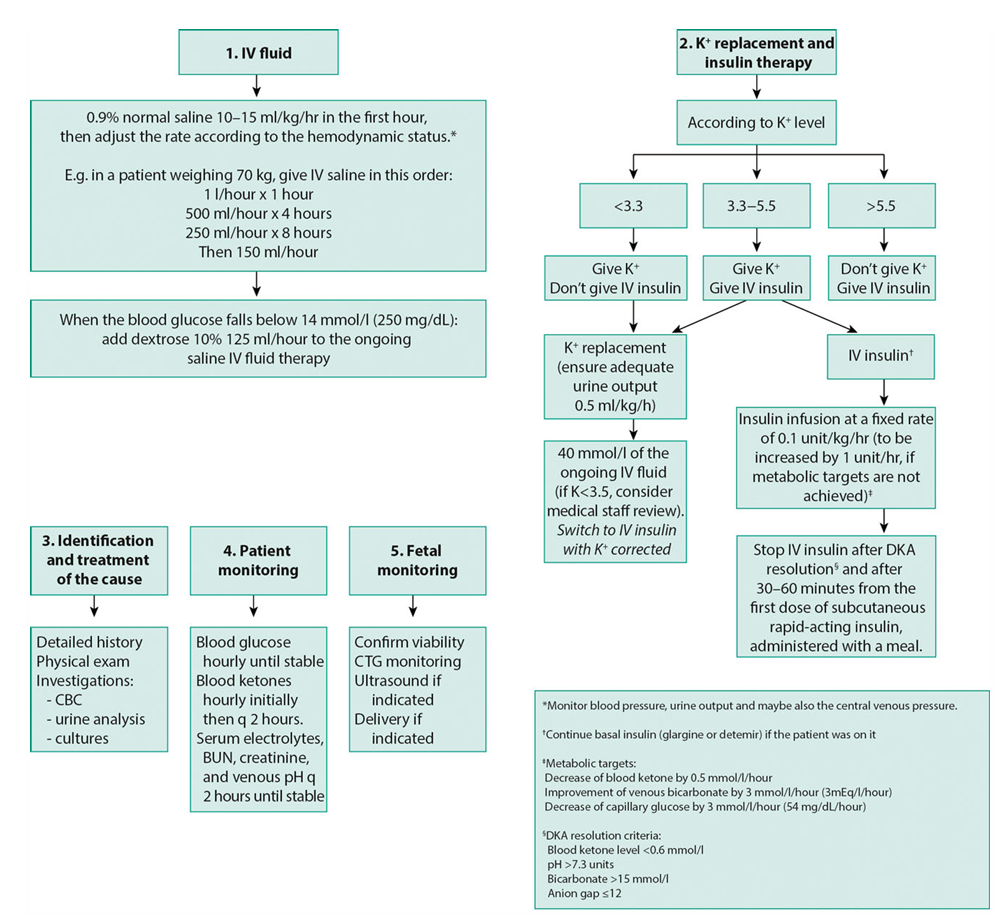
Figure 03: Management Algorithm for DKP (DKP: Diabetic ketoacidosis in pregnancy, IV: Intravenous, FBC: Full blood count, BUN: Blood Urea Nitrogen, CTG: Cardiotocography, Reprinted from Mohan M, et al. Management of diabetic ketoacidosis in pregnancy. Obstet Gynaecol. 2017;19(3):219–27)
C2.10. How to manage blood glucose while on steroids for foetal lung maturity?
Glucose rises 4–6 hours post-injection, peaks in first 24 h and may persist for up to 6 days.
If patient is on metformin SMBG is recommended during that period.
If on insulin additional doses may be required.
Management:
- On metformin: intensify SMBG during steroid course.
- On insulin: increase total daily dose by 20–40%; add extra doses if required.
- Return to baseline regimen after 5 days if delivery has not occurred.
C2.11. What is the role of aspirin in HIP?
- Women with diabetes in pregnancy and pre-existing diabetes have an increased risk of pre-eclampsia.
- Low-dose aspirin (150 mg daily) is recommended from 12 weeks until 36 weeks of POA in:
- All women with pre-existing type 1 or type 2 diabetes.
- Women with GDM plus additional risk factors (hypertension, renal disease, obesity, strong family history of pre-eclampsia).
C3. MONITORING OF COMPLICATIONS IN WOMEN WITH PREEXISTING DIABETES / DIP
C3.1. Diabetic Retinopathy (DR)
C3.1.1. What are the concerns regarding DR in pregnancy?
- Pregnancy is associated with rapid DR progression; new DR develops in ~15% of women with pre-existing diabetes, with 0.5% progressing to proliferative DR.
- Progression risk: ~30% in baseline non-proliferative DR, with ~10% developing proliferative DR.
- Risk factors: long diabetes duration, rapid glycaemic tightening, high HbA1c, baseline DR, hypertension, smoking and pregnancy-related haemodynamic changes.
- Maculopathy may also worsen. Risk persists up to 6–12 months postpartum, though many regress.
- Gestational diabetes does not increase DR risk and does not require retinal screening.
C3.1.2. How to monitor and follow up for DR?
- Retinal assessment at first antenatal visit (unless done in last 3 months).
- If DR is present: repeat retinal assessment at 16–20 weeks and 28 weeks.
DR is not a contraindication to rapid optimisation of blood glucose or to vaginal birth.
C3.1.3. How to manage DR in pregnancy?
- Women with moderate–severe non-proliferative DR, proliferative DR, or macular oedema should be treated before conception.
- Laser photocoagulation should ideally be completed before rapid glycaemic control.
- Laser and intraocular steroids are safe if required.
- Anti-VEGF agents are relatively contraindicated but may be used when vision is threatened and no alternatives exist.
C3.2. Diabetic Nephropathy (DN)
C3.2.1. How to screen, monitor and follow up for DN in pregnancy?
- Preconception: screen for CKD with serum creatinine, eGFR and urine ACR.
- First antenatal visit: renal assessment (if not done in last 3 months).
Consider referral to nephrology if:
- Serum creatinine ≥120 µmol/L
- Urine ACR >30 mg/mmol
- Proteinuria >0.5 g/day
- Do not use eGFR in pregnancy.
- Consider thromboprophylaxis if proteinuria >5 g/day.
C3.2.2. What are the adverse outcomes of DN in pregnancy?
- Increased risk of foetal growth restriction, pre-eclampsia, preterm birth, emergency caesarean, perinatal mortality and irreversible maternal renal decline (especially with reduced eGFR and albuminuria).
C3.2.3. How to manage DN in pregnancy?
- Low-dose aspirin (150 mg) and calcium 1.5 g/day (including dietary) are recommended to reduce pre-eclampsia risk.
- Monitor creatinine monthly if elevated.
- Target blood pressure: <135/85 mmHg.
C3.3. Cardiovascular complications
- Pregnancy increases lipids, blood volume, cardiac output and thrombosis risk.
- Risk of myocardial infarction rises three-fold (maternal mortality 5–11%).
- Diabetes increases risk of CAD, heart failure and stroke.
- Risk factors: long-standing diabetes, hypertension, dyslipidaemia, obesity, smoking, strong family history and age >30 years.
C3.3.1. How to screen and manage cardiovascular complications in pregnancy?
- Screen for cardiac symptoms during preconception (dyspnoea, exertional fatigue, chest pain, etc.).
- Chest pain: evaluate urgently with ECG and cardiac biomarkers.
- High-risk or symptomatic women: consider stress testing (exercise or dobutamine echo) or coronary imaging.
- Counsel regarding discontinuation of teratogenic drugs (statins, ACE inhibitors, ARBs).
- Transthoracic echo should be done to assess LVEF:
- If a woman has LVEF >40% with good exercise tolerance, pregnancy is well tolerated.
- If a woman has impaired LV function, there is high risk of maternal cardiac events.
C4. MONITORING FOETAL GROWTH AND WELLBEING.
Hyperglycaemia in pregnancy increases the risk of foetal growth restriction (FGR), foetal anomalies, foetal macrosomia and still birth. An individualized approach should be followed in monitoring foetal growth and wellbeing in women with diabetes as there is a risk of FGR. If there is suspected FGR, particularly in the presence of maternal hypertension, past history of FGR and/or diabetic nephropathy, more frequent or earlier initiation of scanning may be required.
C4.1. How should pregnant women with Hyperglycaemia in pregnancy (HIP) be offered imaging?
- Dating scan: All pregnant women should undergo an ultrasound dating scan between 9 and 13+6 weeks of gestation to establish accurate gestational age. Correct dating is essential for scheduling further investigations and determining the optimal timing of delivery.
- Nuchal translucency (NT): Women with pre-existing diabetes mellitus should be offered nuchal translucency assessment between 11 and 13+6 weeks of gestation. If the NT is increased, referral to a foetal medicine specialist is indicated. Increased NT may be associated with structural cardiac abnormalities, requiring detailed evaluation of foetal cardiac structures.
- Serial ultrasound: Pregnant women with HIP should undergo serial ultrasound scans to monitor foetal growth and amniotic fluid volume every four weeks from 28 to 36 weeks. The frequency can be individualised according to clinical circumstances and local practice.
- Growth chart plotting: Foetal growth measurements should be plotted on standard growth charts. Clinicians should refer to national guidelines on the diagnosis and management of foetal growth restriction.
- Other obstetric indications: Ultrasound should also be performed for routine obstetric reasons as clinically indicated.
- Monitoring before 24 weeks: Routine surveillance of foetal well-being prior to 24 weeks (e.g. umbilical artery Doppler studies, cardiotocography, or biophysical profile testing) is not recommended unless there is a specific concern for foetal growth restriction.
C4.2. How can the congenital malformations be detected in pre-existing diabetes and DIP?
- Anomaly scan: All women with pre-existing diabetes and DIP should undergo a detailed anomaly scan between 18 and 22 weeks of gestation to detect structural abnormalities. Where available, referral to a foetal medicine specialist should be arranged if a structural abnormality is suspected.
- Common abnormalities: Congenital cardiac malformations are the most frequent anomalies in infants of mothers with pre-existing diabetes and DIP. Other reported abnormalities include neural tube defects, hydrocephalus, holoprosencephaly, caudal regression syndrome, anencephaly, hydranencephaly, auricular and ocular anomalies, renal agenesis and femoral hypoplasia.
- Foetal echocardiography: Women with pre-existing diabetes should be considered for detailed foetal echocardiography performed by a foetal medicine specialist or paediatric cardiologist, if available. Where access is limited, at a minimum, a four-chamber view, outflow tract views and a three-vessel trachea view should be obtained and documented.
- Common cardiac defects: Transposition of the great arteries (with or without ventricular septal defects) is the most frequently reported cardiac defect in infants of mothers with diabetes. Other cardiac malformations include hypoplastic left heart syndrome, atrial and ventricular septal defects, hypertrophic cardiomyopathy, coarctation of the aorta and tetralogy of Fallot.
Indications for foetal echocardiography:
- Poor maternal glycaemic control (first trimester HbA1c >7%)
- Family history of congenital heart disease or previous pregnancy affected by congenital heart disease
- Suspected cardiac abnormality on anomaly scan
Aneuploidy risk: The risk of foetal aneuploidy is not increased in women with pre-existing diabetes.
C4.3. What is the risk of stillbirth in Hyperglycaemia in Pregnancy (HIP)?
- Women with HIP are at increased risk of stillbirth; therefore, surveillance in late pregnancy is recommended.
- Mothers should be counselled on daily monitoring of foetal movements from 28 weeks onwards and any reduction in movements should be promptly reported to healthcare providers.
- Foetal surveillance techniques such as umbilical artery and middle cerebral artery Doppler studies and cardiotocography should be performed as clinically indicated.
- Biophysical profile testing is not recommended for HIP.
A normal ultrasound scan does not fully eliminate the risk of stillbirth, as metabolic derangements may still precipitate intrauterine death.
C4.4. What should be done if increased growth is detected?
- Definition: Foetal macrosomia is defined as estimated foetal weight >90th centile. Indirect markers of poor glycaemic control include abdominal circumference >90th centile and the presence of polyhydramnios.
- Risks: Large-for-gestational-age foetuses are at increased risk of stillbirth and shoulder dystocia in both diabetic and non-diabetic pregnancies.
- Management strategies may include:
- Targeting stricter maternal blood glucose control
- Introduction or intensification of pharmacological therapy
- Adjustment in the frequency and interpretation of ultrasound monitoring
- Consider early delivery
References
- International Association of Diabetes and Pregnancy Study Groups (IADPSG) Consensus Panel, Metzger BE, Gabbe SG, Persson B, et al. International association of diabetes and pregnancy study groups recommendations on the diagnosis and classification of hyperglycemia in pregnancy. Diabetes Care. 2010;33(3):676–82.
- McIntyre HD, Catalano P, Zhang C, Desoye G, Mathiesen ER, Damm P. Gestational diabetes mellitus. Nat Rev Dis Primers. 2019;5:47.
- Royal College of Obstetricians and Gynaecologists (RCOG). Management of Women with Diabetes in Pregnancy. Green-top Guideline No. 9. London: RCOG; 2020.
- Sweeting AN, Ross GP, Hyett J, Molyneaux L, Tan K, Constantino M, et al. Gestational Diabetes Mellitus: A Clinical Update. Endocr Rev. 2022;43(5):763–93.
- Feig DS, Berger H, Donovan L, et al. Diabetes and pregnancy. Endocr Rev. 2024;45(1):1–48.
- American Diabetes Association. 14. Management of Diabetes in Pregnancy: Standards of Care in Diabetes—2025. Diabetes Care. 2025;48(Suppl. 1):S254–S267.
- South Asian Federation of Endocrine Societies (SAFES). GDM action plan and recommendations. J Pak Med Assoc. 2018;68(Suppl 1):S1–23.
- Vasile FC, Preda A, Ștefan AG, Vladu MI, Forțofoiu MC, Clenciu D, et al. An update of medical nutrition therapy in gestational diabetes mellitus. J Diabetes Res. 2021;2021:5266919.
- Arianne Sweeting, Matthew JL Hare, Susan J de Jersey, Alexis L Shub et al. Australasian Diabetes in Pregnancy Society (ADIPS) 2025 consensus recommendations for the screening, diagnosis and classification of gestational diabetes: MJA 233(3)
- Egan AM, Dunne FP. Optimal management of diabetes in pregnancy. Br Med Bull. 2019;131(1):97–116.
- Mohan M, et al. Management of diabetic ketoacidosis in pregnancy. Obstet Gynaecol. 2017;19(3):219–27.
- Rowan JA, Hague WM, Gao W, Battin MR, Moore MP; MiG Trial Investigators. Metformin versus insulin for the treatment of gestational diabetes. N Engl J Med. 2008;358(19):2003–15.
- Brown J, Grzeskowiak LE, Williamson K, Downie MR, Crowther CA. Insulin for the treatment of women with gestational diabetes. Cochrane Database Syst Rev. 2017;11:CD012037.
- Simmons D, Immanuel J, Hague WM, Teede H, Nolan CJ, Peek MJ, et al. Treatment of Gestational Diabetes Mellitus Diagnosed Early in Pregnancy. N Engl J Med [Internet]. 2023 Jun 8 [cited 2026 Jan 30];388(23):2132–44. Available from: http://www.nejm.org/doi/10.1056/NEJMoa2214956
- Lowe WL, Scholtens DM, Kuang A, Linder B, Lawrence JM, Lebenthal Y, et al. Hyperglycemia and adverse pregnancy outcome follow-up study (Hapo fus): maternal gestational diabetes mellitus and childhood glucose metabolism. Diabetes Care [Internet]. 2019 Mar 1;42(3):372–80.
- Feig DS, Donovan LE, Zinman B, Sanchez JJ, Asztalos E, Ryan EA, et al. Metformin in women with type 2 diabetes in pregnancy (Mity): a multicentre, international, randomised, placebo-controlled trial. The Lancet Diabetes & Endocrinology [Internet]. 2020 Oct;8(10):834–44.
- Tieu J, Coat S, Hague W, Middleton P, Shepherd E. Oral anti-diabetic agents for women with established diabetes/impaired glucose tolerance or previous gestational diabetes planning pregnancy, or pregnant women with pre-existing diabetes. Cochrane Pregnancy and Childbirth Group, editor. Cochrane Database of Systematic Reviews [Internet]. 2017 Oct 18;2017(10).
- Hernandez TL, Van Pelt RE anderson MA, Daniels LJ, West NA, Donahoo WT, et al. A higher-complex carbohydrate diet in gestational diabetes mellitus achieves glucose targets and lowers postprandial lipids: a randomized crossover study. Diabetes Care. 2014;37(5):1254–62.
- Weight gain during pregnancy: reexamining the guidelines [Internet]. Washington, D.C.: National Academies Press; 2009
D. INTRAPARTUM CARE
D1. WHAT ARE THE KEY GOALS OF INTRAPARTUM MANAGEMENT IN WOMEN WITH HYPERGLYCAEMIA IN PREGNANCY (HIP)?
The primary aim is to maintain maternal euglycemia during labour and delivery to reduce the risk of neonatal hypoglycaemia, acidosis and other maternal and neonatal complications. Effective management requires coordination among obstetricians, endocrinologists, anaesthetists, midwives and neonatologists.
D2. HOW SHOULD THE TIMING AND MODE OF DELIVERY BE DECIDED?
Timing and mode of delivery (MOD) should be individualized based on glycaemic control, maternal/foetal complications. The decision should be finalized by 36 weeks of gestation.
Table 09: Recommendations for time of delivery
| Group | Recommended Time of Delivery |
|---|---|
| MNT only and uncomplicated | 40–40+6 weeks |
| On Metformin and uncomplicated | 38–39 weeks |
| On Insulin and uncomplicated | 37–38 weeks |
| Complicated (metabolic/maternal/fetal) | Consider elective delivery at 36–37 weeks |
Mode of Delivery (MOD):
- Aim for vaginal delivery by timed induction of labour unless there is an obstetric indication against vaginal delivery.
HIP itself is not an indication for cesarean section
- Macrosomia with more than 4.0 kg: Discuss risks and consider elective caesarean section.
- Diabetes alone is not a contraindication to offer VBAC (Vaginal Birth After Caesarean) /TOLAC (Trial of Labour After Caesarean)
D3. HOW SHOULD GLUCOSE BE MONITORED DURING LABOUR?
Target glucose range: Maintain 72–126 mg/dL throughout labour.
Frequency of monitoring:
- Hourly glucose monitoring is recommended for all mothers in active labour.
2 - 4 hourly monitoring can be considered in the latent phase for those with GDM/ T2DM on diet/ metformin only
- For those undergoing elective caesarean section under general anaesthsia every 30-minute monitoring is recommended until recovery.
- If metabolic decompensation is suspected, use VBG/ABG for assessment of pH, bicarbonate and ketones (if available).
D4. WHAT ARE THE OPTIONS FOR GLYCAEMIC MANAGEMENT DURING LABOUR?
Two main options are available, depending on glucose levels, stability and type of diabetes.
Option 1 – Correctional Subcutaneous Rapid-Acting Insulin (SC)
Suitable for:
- Those with gestational diabetes managed with diet or oral agents.
- Well-controlled pre-existing diabetes
- Early labour, taking oral fluids
- Refer to Table 10 for insulin correction scale.
- Repeat monitoring every 1–2 hours and adjust accordingly.
Option 2 – Variable Rate Intravenous Insulin Infusion (VRIII)
Indicated for:
- Type 1 diabetes (start at onset of labour or when fasting >6 hours)
- Poorly controlled type 2 diabetes or GDM where blood glucose levels are persistently > 7 mmol/L
- Must be used together with a dextrose-containing infusion to prevent hypoglycaemia.
Suggested infusion setup:
- Insulin solution: 50 units of soluble insulin in 49.5 mL of 0.9% NaCl (1 unit/mL).
- Start rate: As per glucose level (see Table 11).
- The recommended substrate fluid to be administered alongside the VRIII is 5% glucose in 0.9% saline with 0.15% KCl at a rate of 50 mL/h.
- Monitor glucose hourly and serum electrolytes/VBG every 4–6 hours if infusion continues >6 hours.
D5. HOW SHOULD INSULIN AND ORAL AGENTS BE ADJUSTED FOR PLANNED INDUCTION OR CAESAREAN SECTION?
| Situation | Management |
|---|---|
| Evening before planned procedure | Reduce basal/long-acting insulin dose by 20–50%. |
| Morning of delivery (induction or CS) | Omit oral hypoglycaemics and short-acting insulin. Consider correctional subcutaneous insulin or VRIII if glucose above target. |
| If on MDI + Metformin | Continue usual regimen the day before. Stop prandial insulin and metformin once VRIII starts. Continue basal insulin (glargine/detemir/NPH). |
| During VRIII | Use Table 11 for insulin rate adjustment and dextrose infusion management. |
Table 10: Correctional (Supplemental) Soluble Insulin Dosing
| Capillary BG (mg/dL) | Suggested Soluble Insulin Dose |
|---|---|
| < 72 | Treat hypoglycemia per protocol (oral/IV glucose), re-check in 10 min |
| 72 – 126 | No insulin; continue monitoring |
| 126 – 140 | 1 unit |
| 141 – 160 | 2 units |
| 161 – 180 | 3 units |
| 181 – 200 | 4 units |
| >200 | Consider VRIII if persistent hyperglycemia |
Table 11: Suggested VRIII for use during labour
| Finger prick blood glucose (mg/dL) | Algorithm 1 (For most women) | Algorithm 2 (For women needing >80 units/day, on steroids or not controlled on Algorithm 1) |
|---|---|---|
| < 72 | Stop insulin for 20 minutes. Treat hypoglycemia per guideline. Recheck BG in 10 minutes | Stop insulin for 20 minutes. Treat hypoglycemia per guideline. Recheck BG in 10 minutes |
| 72 – 99 | 0.2 | 0.5 |
| 100 – 126 | 0.5 | 1.0 |
| 127 – 153 | 1.0 | 1.5 |
| 154 – 198 | 1.5 | 2.0 |
| 199 – 252 | 2.0 | 2.5 |
| 253 – 306 | 2.5 | 3.0 |
| 307 – 360 | 3.0 | 4.0 |
| > 360 | 4.0 | 6.0 |
D6. HOW SHOULD KETONE BODIES BE MONITORED AND INTERPRETED?
- Routine ketone testing is not required for all women.
Perform blood or urine ketones only if:
- Persistent hyperglycaemia >200 mg/dL
- Nausea/vomiting or clinical suspicion of ketosis
- Blood ketone measurement is preferred, but urine ketones are acceptable if blood testing unavailable.
- If ketosis is detected, assess acid–base status using VBG/ABG and manage as per diabetic ketoacidosis protocol.
D7. WHAT SPECIAL CONSIDERATIONS APPLY DURING PRETERM LABOUR?
- Preterm labour: Do not withhold corticosteroids for lung maturity due to diabetes.
- To manage steroid-induced hyperglycaemia: Initiate insulin adjustments as per Section C2.6.
- Ensure neonatal care unit is informed and prepared for potential neonatal hypoglycaemia.
D8. WHAT IS THE ROLE OF THE MULTIDISCIPLINARY TEAM APPROACH?
- Labour and delivery planning should involve obstetricians, endocrinologists/ physicians, paediatricians/ neonatologists and midwives/nurses.
- Provide patient education and ensure written management plans are in place before admission for delivery.
References
- Joint British Diabetes for in patient care. Managing diabetes and hyperglycaemia during labour and birth. JBDS 12 February 2023.
- Brown J, Grzeskowiak LE, Williamson K, Downie MR, Crowther CA. Insulin for the treatment of women with gestational diabetes. Cochrane Database Syst Rev. 2017;11:CD012037.
E. POSTPARTUM CARE
E1. NEONATAL CARE
Infants of mothers with hyperglycaemia in pregnancy (HIP) are at increased risk of hypoglycaemia, respiratory distress, polycythaemia, jaundice, congenital anomalies and long-term metabolic complications. Delivery should ideally occur in centres with 24-hour neonatal resuscitation facilities.
E1.1. What are the initial assessments?
- At delivery, document birth weight, gestational age and the presence of features of birth injury (Erb’s palsy) or congenital abnormalities.
- Perform blood glucose testing at 2–4 hours of age (before the second feed).
- Perform targeted blood tests for neonates with clinical signs of polycythaemia, hyperbilirubinemia, hypocalcaemia, or hypomagnesaemia.
- If clinical suspicion of congenital heart disease exists (e.g., heart murmur, respiratory distress, cyanosis, abnormal saturation test or cardiac insufficiency), arrange echocardiography.
E1.2. What are the indications for admission to specialized/ ICU care?
- Respiratory distress or need for oxygen/ventilation.
- Symptomatic or persistent hypoglycaemia.
- Cardiac decompensation from congenital heart disease/ hypertrophic cardiomyopathy with outflow tract obstruction.
- Polycythaemia requiring partial exchange transfusion.
- Requirement for intravenous fluids or tube feeding (not feasible on the postnatal ward).
- Jaundice requiring intensive phototherapy or frequent bilirubin monitoring.
- Prematurity (<34 weeks’ gestation).
E1.3. When should the new-born be discharged?
- Neonates should remain in hospital for at least 24 hours until effective feeding is established.
- Discharge is appropriate when the infant demonstrates adequate feeding, normoglycaemia (>2.0 mmol/L value twice 3-4 hours apart), without symptoms or complications.
E1.4. How to assess for and prevent neonatal hypoglycaemia?
- Initiate breastfeeding within 30 minutes of birth and continue (every 2–3 hours) on demand.
- Maintain pre-feed glucose > 45 mg/dL (2.6 mmol/L) without symptoms.
- Monitor for clinical features of hypoglycaemia: jitteriness, poor feeding, lethargy, apnoea, seizures.
Management thresholds with options:
- Asymptomatic baby with prefeed sugar 18–45 mg/dL (1.0–2.6 mmol/L)- continue enteral feed (expressed breast milk, cup/tube feeding), recheck in 2-4 hours/ before next feed.
- Indications for intravenous management (i.e., urgent intravenous (IV) access and IV 10% dextrose bolus(2.5ml/kg) followed by infusion)-
- Symptomatic baby with prefeed sugar ≤45 mg/dL (2.6 mmol/L) even once
- Consecutive (more than 2 prefeed values of ≤36 mg/dL(2.0mmol/L) in an asymptomatic baby
- Single prefeed value of ≤18 mg/dL(1.0mmol/L)
E1.5. What should be monitored later?
- Continue capillary glucose monitoring every 2- 4 hour until prefeed sugar >45 mg/dL (2.6 mmol/L) twice consecutively.
- Long-term follow-up should include visual assessment, growth monitoring and counselling to prevent childhood obesity.
- Parents should be counselled regarding healthy lifestyle and feeding practices.
E2. MATERNAL CARE
E2.1 How to manage glucose in the immediate post-partum period?
Women on insulin before pregnancy:
- Insulin needs fall sharply after delivery.
There are 3 options to decide on the daily insulin dose:
- revert to pre-pregnancy dose
- 75% of 1st trimester dose
- 50% of late pregnancy dose.
- Daily review with diabetes team, aim to avoid hypoglycaemia.
- Postpartum glycaemic target: 108–180 mg/dL in hospitalised women.
- Glucose monitoring can be done pre meals (before each meal)
Women not on insulin before pregnancy
- Stop insulin infusion/injections once placenta delivered.
- If previously on oral medication: continue glucose monitoring 4-hourly until first meal.
Women with GDM
- Stop all glucose-lowering medication after placenta delivery.
- Consider monitoring fasting and post-meal glucose for 24 hrs.
Diagnostic thresholds for persistent diabetes:
- Fasting > 126 mg/dL
- Post-meal > 200 mg/dL
E2.2. What are the recommendations for management at 4-8 weeks post-partum?
- Women with HIP should attend a postnatal clinic at 6–8 weeks, ideally linked with child immunisation visits.
- Offer lifestyle counselling (weight management, diet, exercise).
- Women with pre-existing diabetes should return to routine diabetes care.
- Women with GDM should be counselled on future diabetes risk and recurrence of GDM.
- Recommended testing: 75 g OGTT at 6–12 weeks postpartum. If not feasible, FPG and 2-hour PPPG may be used.
- If results are normal, advise annual glucose screening (FPG or HbA1c).
- If abnormal, refer to a diabetes clinic for long-term management.
- Emphasise the importance of contraception and preconception counselling for future pregnancies, with peri-conception folic acid (5 mg/day) and optimised glycaemic control.
E2.3. What are the recommendations for breast feeding?
- Exclusive breastfeeding is recommended, as it reduces neonatal hypoglycaemia and lowers maternal risk of obesity and type 2 diabetes.
- Metformin and all insulins are safe during lactation.
- Drugs contraindicated during pre-conception and pregnancy for safety reasons (e.g. ACE inhibitors, statins) should not be restarted during breastfeeding.
- For those with familial hypercholesterolemia or those at high cardiovascular risk an individualised decision should be taken considering the risk and benefits.
E2.4. What are the recommendations for family planning?
- All reliable contraceptive methods may be used, tailored to maternal health status and preferences.
- Emphasise the importance of spacing pregnancies and ensuring optimal glycaemic control prior to conception.
E2.5. How should the mother be managed in the long-term?
- Women with prior HIP should be considered a high-risk group for type 2 diabetes and cardiovascular disease.
- Long-term follow-up should include:
- Annual glucose screening.
- Cardiometabolic risk assessment (BMI, BP, lipid profile).
- Lifestyle interventions to prevent obesity and diabetes.
- Integration with primary care and community health services is encouraged for sustained follow-up.
References
- Rozance PJ, Hay WW Jr. Hypoglycemia in newborn infants: Features associated with adverse outcomes. Biol Neonate. 2006;90(2):74–86.
- Hay WW Jr, Raju TN, Higgins RD, Kalhan SC, Devaskar SU. Knowledge gaps and research needs for understanding and treating neonatal hypoglycemia: Workshop report. J Pediatr. 2009;155(5):612–7.
- National Institute for Health and Care Excellence (NICE). Diabetes in pregnancy: management from preconception to the postnatal period. NICE guideline [NG3]. London: NICE; 2020.
- Royal College of Obstetricians and Gynaecologists (RCOG). Management of Women with Diabetes in Pregnancy. Green-top Guideline No. 9. London: RCOG; 2020.
- American Diabetes Association. 14. Management of Diabetes in Pregnancy: Standards of Care in Diabetes—2025. Diabetes Care. 2025;48(Suppl. 1): S254–S267.
- Bellamy L et al. Postpartum risk of type 2 diabetes after GDM: A systematic review. Lancet. 2009.
- Kim C. Maternal outcomes and follow-up after gestational diabetes mellitus. Diabet Med. 2014 Mar;31(3):292–301.
Annexures
Annexure 1
- Procedure of 75 g OGTT
- The woman should have had no diet restrictions in the previous 3 days and participated in usual physical activity.
- The pregnant woman must reach the laboratory early morning, after overnight fasting. She must not have taken even coffee/tea.
- The minimum time required for fasting is 8 hours and fasting should not exceed 14 hours.
- On arrival at the laboratory, a blood sample is drawn and she is given a drink consisting of 75 gm of anhydrous glucose dissolved in a large glass of water (300 ml).
- Two more blood samples are drawn at one hour and two hours respectively, after drinking the glucose drink. The time is measured from the moment she begins to drink the glucose solution.
- If the patient arrives non fasting, only the two-hour blood samples should be taken after the glucose drink.
- The woman must be seated during this period with minimal physical activity.
- She must refrain from eating or drinking anything else, until the test is completed.
- Preparation for 2hr PPPG
- Pregnant woman should have an average Sri Lankan meal 2 hours before the test (rice with curries)
- The meal should be eaten over a maximum period of 15 minutes time.
- The two hours should be calculated from the starting time of the meal.
Eg: Meal starts at 7.30am. It should be finished by 7.45am and the time for PPPG is 9.30am.
Annexure 2
Suggested daily meal plans for sedentary normal weight, underweight and overweight pregnant mothers.
| Food Group | Meal | Normal weight | Under weight | Overweight |
|---|---|---|---|---|
| Breakfast | Breakfast | |||
| Cereals | Boiled cowpea/ green gram | 1 cup | 1 cup | 1 cup |
| Oil | Scraped coconut | 1 tbs | 1 tbs | 1 tbs |
| Snack | Snack | |||
| Cereal & oil | Thriposha (with coconut 1 tbs without sugar) | 3 tbs | 3 tbs | 3 tbs |
| Fruit | Papaw | 1 piece | 1 piece | 1 piece |
| Lunch | Lunch | |||
| Cereal | Rice | 1 ⅓cups | 1⅔ cups | 1 cup |
| Vegetable | Green leaves | 3 tbs | 3 tbs | 3 tbs |
| Vegetable | Beans/ long beans/ wing beans | 2 tbs | 2 tbs | 2 tbs |
| Vegetable | Carrots/ pumpkin/ beet root | 2 tbs | 2 tbs | 2 tbs |
| Fish/meat | Fish/ chicken | 2 pieces | 2 pieces | 2 pieces |
| Oil | Gravy | 2tbs | 3 tbs | 2 tbs |
| Snack | Snack | |||
| Milk | Milk powder 2 tbs (without sugar) | 1 cup | 1 cup | 1 cup |
| Fruit | Guava | 1 small | 1 small | 1 small |
| Oil | Peanuts | - | 1 tbs | - |
| Dinner | Dinner | |||
| Cereal | Rice | 1 ⅓ cups | 1⅔ cups | 1 cup |
| Vegetable | Vegetable | 6 tbs | 6 tbs | 6 tbs |
| Fish/meat/ egg | Fish/ chicken | 1 piece | 2 pieces | 1 piece |
| Oil | Gravy | 2tbs | 3tbs | 2 tbs |
| Snack | ||||
| Milk | Milk powder 2 tbs (without sugar) | 1 cup | 1 cup | 1 cup |
| Water minimum of 8 glasses per day | Water minimum of 8 glasses per day | Water minimum of 8 glasses per day | Water minimum of 8 glasses per day | Water minimum of 8 glasses per day |
Annexure 3
Simple and complex carbohydrate containing food items.
| Simple carbohydrates | Complex carbohydrates |
|---|---|
| White flour | Whole grains (parboiled rice, oats, atta flour, whole wheat bread, barley) |
| White bread | Legumes (chickpeas, cowpea, mun, beans, kidney beans, soya beans, pumpkin seeds) |
| White raw rice | Starchy vegetables (sweet potato, radish) |
| Fruit juice | Vegetables (green vegetables, tomato, carrots, spinach, cucumber) |
| Candy and sugar syrup | |
| Biscuits | |
| Milk and other dairy products (naturally contain lactose, which is a simple sugar) | |
| Sugary drinks | |
| Baked goods and sweets with added sugars | |
| Most low snacks, such as glucose tabs, gels and cake icing | |
| Whole ripe fruit and some vegetables (naturally occurring sugar) |